Longest Roads in UK: Top 10 Longest A-Roads and Motorways Explained
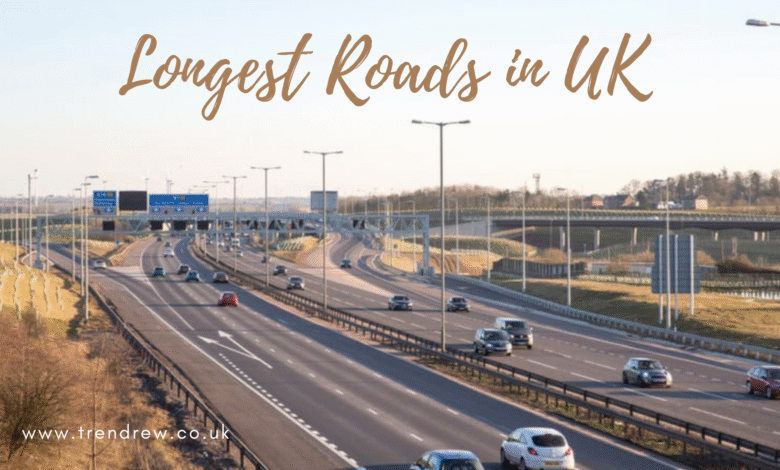
The United Kingdom is home to a vast and complex network of roads that link bustling cities, quaint towns, and breathtaking countryside. These routes have shaped trade, travel, and tourism for centuries, reflecting both the nation’s history and its modern infrastructure. Among them, the A1 stands out as the longest road in the UK, stretching from the heart of London all the way to the Scottish capital, Edinburgh.
This iconic road, along with other major routes like the A38, A30, and M6, forms the backbone of Britain’s transportation system. Each road carries its own story of Roman legacies, industrial growth, and the evolution of modern travel. Let’s take a detailed journey through the longest roads in the UK, exploring their history, routes, and significance.
1. A1 – The Longest Road in the UK
Length: 410 miles (660 km)
Route: London → Edinburgh
Regions Covered: England and Scotland
The A1, often referred to as the Great North Road, holds a special place in British transport history. Beginning in the heart of London near St. Paul’s Cathedral, it weaves its way northward through England before reaching Edinburgh. This road not only connects two capital cities but also passes through several key urban centers such as Peterborough, Doncaster, York, Newcastle upon Tyne, and Berwick-upon-Tweed.
Historic Roots
The A1’s origins date back to the Roman era, when it was part of Ermine Street, a major Roman road linking London to York and beyond. During the 17th and 18th centuries, it became known as the Great North Road, serving as a vital mail and coaching route. With the arrival of motor vehicles, the route evolved into the A1, becoming Britain’s most important north–south corridor.
Modern Upgrades
Sections of the A1 have been upgraded to motorway standard, forming the A1(M). These improvements, especially between London and Newcastle, have transformed it into a high-speed, safe, and reliable road for both commuters and long-haul drivers.
Modern bypasses now divert traffic around major towns, easing congestion and ensuring smoother journeys.
Notable Landmarks Along the A1
-
Hatfield House (Hertfordshire): A grand Jacobean mansion near Welwyn Garden City
-
York Minster (York): One of the most iconic cathedrals in Europe
-
Angel of the North (Gateshead): A towering contemporary sculpture symbolizing northern pride
-
Alnwick Castle (Northumberland): Famous as a filming location for the Harry Potter series
-
Holy Island (Lindisfarne): A serene tidal island rich in early Christian history
Economic and Cultural Importance
The A1 is more than just a road. It is an economic lifeline that facilitates trade between England and Scotland, supports heavy goods transport, and connects business hubs across regions. Moreover, its historical significance attracts countless travelers eager to explore the heritage along its path.
2. A38 – “The Devon Expressway”
Length: 310 miles (500 km)
Route: Bodmin → Mansfield
The A38 is Britain’s second-longest road, stretching from the scenic Cornish town of Bodmin to Mansfield in Nottinghamshire. Known as the Devon Expressway through the southwest, this road serves as a key connector between the Midlands and the South West.
It passes through major locations such as Plymouth, Exeter, Bristol, Gloucester, and Birmingham, offering both practical connectivity and stunning landscapes. Before the A1 was fully upgraded, the A38 was once considered the longest continuous road in the UK.
3. A30 – From Land’s End to London
Length: 284 miles (457 km)
Route: Land’s End → London
The A30 has long been a traditional route to the far southwest of England. Beginning at Land’s End, Britain’s most westerly point, it travels through Cornwall, Devon, and Somerset, before heading toward London.
This road is celebrated for its scenic beauty, winding through rolling countryside and coastal landscapes, and it remains a vital artery for tourism in the region.
4. A6 – A Historic North-South Link
Length: 282 miles (454 km)
Route: Luton → Carlisle
Once the primary north–south route before the construction of the M1, the A6 runs from Luton through Leicester, Derby, Manchester, and Preston, before reaching Carlisle. Its route highlights the industrial heart of England, connecting several of the country’s major manufacturing hubs.
5. A5 – The Roman Road Reimagined
Length: 260 miles (418 km)
Route: London → Holyhead (Anglesey, Wales)
The A5 follows the path of Watling Street, an ancient Roman road, and was later redeveloped by the great engineer Thomas Telford in the 19th century. This historic route connects London to Holyhead, serving as a crucial link between England and North Wales, and remains an essential part of the UK’s strategic road network.
6. M6 – The Longest Motorway in the UK
Length: 232 miles (373 km)
Route: Catthorpe → Gretna
Known as the “Backbone of Britain’s motorway network”, the M6 runs from Leicestershire to the Scottish border, passing through Birmingham, Manchester, and Carlisle. It plays a vital role in the movement of goods and commuters across the country. Despite being a motorway, it also offers scenic stretches, particularly in the Lake District.
7. A9 – Scotland’s Longest Road
Length: 273 miles (439 km)
Route: Falkirk → Scrabster (near Thurso)
The A9 cuts through the heart of Scotland, linking the Central Belt to the northern Highlands. It passes through Perth, Inverness, and ends near the northern coast. The A9 is renowned for its breathtaking views of mountains, lochs, and open countryside, making it one of the UK’s most scenic drives.
8. A7 – A Road Through History
Length: 193 miles (311 km)
Route: Carlisle → Edinburgh
The A7 offers a historic and picturesque drive through the Scottish Borders, connecting Carlisle to Edinburgh. Known for its rolling landscapes and quiet beauty, it is often considered one of the most scenic long-distance roads in Britain.
9. M1 – The First Intercity Motorway
Length: 193 miles (311 km)
Route: London → Leeds
The M1, opened in 1959, was the UK’s first intercity motorway. It revolutionized travel by connecting London with Leeds through the Midlands, and today, it remains a vital link for commuters and freight traffic alike.
10. A82 – The Scenic Highland Route
Length: 167 miles (269 km)
Route: Glasgow → Inverness
The A82 passes along Loch Lomond, Glencoe, and Loch Ness, offering some of the most stunning natural scenery in the UK. It is also part of Scotland’s famous North Coast 500 route, making it a favorite among tourists and adventurers.
Summary Table of the Longest Roads in UK
| Rank | Road | Length (Miles) | From → To | Type |
|---|---|---|---|---|
| 1 | A1 | 410 | London → Edinburgh | A-road |
| 2 | A38 | 310 | Bodmin → Mansfield | A-road |
| 3 | A30 | 284 | Land’s End → London | A-road |
| 4 | A6 | 282 | Luton → Carlisle | A-road |
| 5 | A5 | 260 | London → Holyhead | A-road |
| 6 | M6 | 232 | Catthorpe → Gretna | Motorway |
| 7 | A9 | 273 | Falkirk → Scrabster | A-road |
| 8 | A7 | 193 | Carlisle → Edinburgh | A-road |
| 9 | M1 | 193 | London → Leeds | Motorway |
| 10 | A82 | 167 | Glasgow → Inverness | A-road |
Conclusion
The longest roads in UK tell a story that stretches from Roman Britain to the age of modern motorways. The A1, in particular, represents centuries of progress, linking not only two capitals but countless lives and industries along its path. Whether you are traveling for business or adventure, these roads showcase the incredible diversity and heritage of the United Kingdom.
From the rugged beauty of the Scottish Highlands on the A82 to the historic corridors of Watling Street on the A5, each road offers a unique glimpse into Britain’s past and present. The next time you embark on a long drive across the UK, remember you are not just following a route; you are tracing the very spine of British history.
FAQs
What is the longest road in the UK?
The A1 is the longest road in the UK, running approximately 410 miles from London to Edinburgh.
Which motorway is the longest in Britain?
The M6, spanning 232 miles, is the UK’s longest motorway.
What cities does the A1 pass through?
The A1 passes through London, Peterborough, Doncaster, York, Newcastle upon Tyne, and Edinburgh.
Is the A1 entirely a motorway?
No. Parts of it are upgraded to motorway status as A1(M), while other sections remain standard dual or single carriageways.
Which UK road is considered the most scenic?
The A82 from Glasgow to Inverness is often praised for its breathtaking Highland scenery.