Integrated Business Solutions Meaning | 2025 Complete Guide
In an increasingly competitive global marketplace, businesses can no longer afford fragmented systems and disconnected workflows. The concept of integrated business solutions has emerged as a key enabler of efficiency, collaboration, and growth.
Integrated business solutions meaning refers to a comprehensive approach where different business processes, departments, and technologies are connected into a single, unified system. This integration allows information to flow seamlessly between finance, sales, marketing, operations, HR, and IT—removing barriers and enabling smarter, faster decision-making.
Put simply, it’s about transforming separate systems into one cohesive structure that keeps the entire organization running efficiently and transparently.
Understanding Integrated Business Solutions Meaning
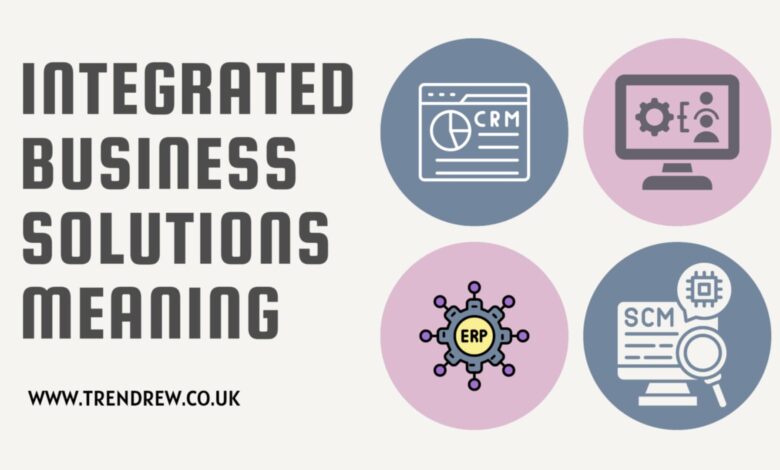
An integrated business solution combines software, strategies, and processes that allow various departments to share data and communicate effectively. Instead of isolated applications or manual data transfers, the system provides a synchronized ecosystem—often powered by technologies such as ERP (Enterprise Resource Planning), CRM (Customer Relationship Management), and BI (Business Intelligence) platforms.
These solutions act as the “digital nervous system” of a business, ensuring every department works in harmony rather than in silos. When implemented effectively, they create a single source of truth, eliminating data duplication and improving operational accuracy.
Core Purpose of Integrated Business Solutions
The ultimate goal of integration is to simplify complex operations and enhance decision-making. By bringing every aspect of the business under one digital roof, companies gain real-time visibility, improve accountability, and reduce inefficiencies.
For example, a retail company using integrated systems can automatically link its sales, inventory, and finance data. Once a sale is made, stock levels adjust automatically, invoices are generated instantly, and reports update in real-time. This not only improves efficiency but also boosts customer satisfaction.
Key Components of Integrated Business Solutions
Enterprise Resource Planning (ERP)
ERP software is the backbone of integration. It unifies key internal functions such as accounting, inventory management, procurement, and HR into a centralized platform. Businesses benefit from shared data, consistent reporting, and automated workflows that reduce manual tasks.
Customer Relationship Management (CRM)
CRM systems manage the customer journey from prospecting to after-sales service. Integrated with ERP and marketing tools, CRMs provide a holistic view of customer interactions—helping sales and service teams deliver personalized experiences.
Business Intelligence (BI) Tools
BI platforms analyze data across departments, offering dashboards, performance metrics, and predictive analytics. Leaders can monitor trends, identify opportunities, and make strategic, data-backed decisions.
Supply Chain Management (SCM)
SCM systems control the flow of materials, goods, and information across the supply chain. Integration with ERP ensures precise inventory control, cost management, and timely delivery.
Automation and Cloud Technologies
Modern solutions often include AI-driven automation, machine learning, and cloud computing, ensuring scalability, mobility, and data security while minimizing IT overhead.
Why Integrated Business Solutions Matter
Businesses that still rely on separate systems often struggle with data duplication, miscommunication, and poor visibility. Integrated business solutions solve these problems by:
-
Breaking down data silos: Centralized databases ensure everyone works from the same information.
-
Improving collaboration: Teams share insights and coordinate seamlessly.
-
Automating workflows: Routine tasks are handled automatically, freeing employees for higher-value work.
-
Enhancing customer experiences: Integrated CRMs allow personalized and timely service.
-
Supporting strategic growth: Real-time analytics empower faster and smarter business decisions.
Real-World Example
Imagine a medium-sized UK manufacturing firm. Before integration, the sales, finance, and operations teams worked in isolation. Orders were manually transferred from one department to another, often causing delays and miscommunication.
After implementing an integrated ERP and CRM system:
-
Sales data instantly triggered order processing and inventory updates.
-
The finance team received automatic notifications for invoicing.
-
Management had access to real-time performance dashboards.
The result? Reduced operational costs, improved accuracy, and faster customer delivery—all from one synchronized platform.
Benefits of Integrated Business Solutions
Operational Efficiency
Integration eliminates redundancy and manual re-entry, reducing time spent on repetitive tasks. Automation ensures smoother workflows and higher productivity.
Better Decision-Making
With accurate, real-time data accessible from one platform, leaders can make informed decisions that respond to market shifts quickly.
Cost Reduction
Combining multiple systems into one reduces software licensing, IT maintenance, and labor costs associated with managing separate tools.
Improved Customer Relations
Integrated CRMs provide a 360-degree view of the customer, enabling businesses to deliver personalized communication, faster responses, and superior service.
Scalability and Flexibility
As businesses grow, integrated solutions can easily accommodate new processes, users, or departments without requiring a full system overhaul.
Challenges in Implementation
While integration delivers impressive results, companies often face a few hurdles:
-
High initial setup costs: Enterprise-grade integration can require a substantial upfront investment.
-
Resistance to change: Employees might hesitate to adapt to new systems.
-
Data migration issues: Transferring legacy data accurately is crucial for success.
-
Compatibility concerns: Older software may not integrate easily with modern platforms.
-
Ongoing maintenance: Regular updates and user training are necessary to keep the system efficient.
These challenges can be mitigated through clear planning, strong leadership, and choosing the right implementation partner.
Steps to Implement an Integrated Business Solution
-
Assessment: Analyze existing systems and identify integration needs.
-
Planning: Define objectives, budgets, and timelines.
-
Selection: Choose between an All-in-One suite or a Best-of-Breed approach.
-
Implementation: Integrate systems, migrate data, and configure workflows.
-
Training: Ensure teams understand how to use the new tools effectively.
-
Evaluation: Monitor performance, gather feedback, and refine processes.
All-in-One vs. Best-of-Breed Integration
All-in-One Solutions
These are single platforms—like Microsoft Dynamics 365 or Oracle NetSuite—that include built-in modules for every business function.
Pros: Easy setup, consistent user experience, unified data.
Cons: Less flexibility and higher cost for customization.
Best-of-Breed Solutions
This approach allows companies to select the best software for each department and connect them via APIs.
Pros: Highly customizable and flexible.
Cons: Integration complexity and potential maintenance issues.
Choosing the right approach depends on company size, budget, and future scalability needs.
Frequently Asked Questions (FAQs)
1. What is the main purpose of integrated business solutions?
To connect all business departments and technologies into one unified ecosystem for efficiency, accuracy, and better decision-making.
2. Are integrated business solutions suitable for small businesses?
Yes. Cloud-based integration platforms make it affordable and scalable for startups and SMEs.
3. How does integration improve customer experience?
By linking sales, marketing, and service tools, companies can personalize communication and resolve customer issues faster.
4. What’s the difference between ERP and integrated business solutions?
ERP is one component of integration focused on internal operations, while integrated business solutions encompass ERP, CRM, BI, and other systems together.
5. How long does implementation take?
Depending on size and complexity, full integration can take anywhere from a few months to over a year.
Conclusion
Understanding the integrated business solutions meaning is essential for modern organizations aiming for digital maturity and operational excellence. By connecting every department through technology, businesses create a unified structure that drives efficiency, innovation, and growth.
While the journey requires careful planning and change management, the outcome—enhanced productivity, reduced costs, and superior customer satisfaction makes integration one of the most valuable investments any company can make in 2025 and beyond.